
At first glance, South Korea is a model of public safety: a wealthy, orderly democracy with very low homicide levels and virtually no civilian firearm culture.
With an intentional homicide rate of just 1.3 per 100,000 people – half the average of the Organisation for Economic Co-operation and Development (OECD) – the country is fundamentally a low-violence society.
To attribute this safety entirely to a near-absence of firearms, however, is to ignore deep cultural realities. Like many East Asian societies, South Korea is historically cohesive, collectivist and structurally orderly. It is highly unlikely that legal civilian firearm ownership would, by itself, automatically produce rampant gun violence.
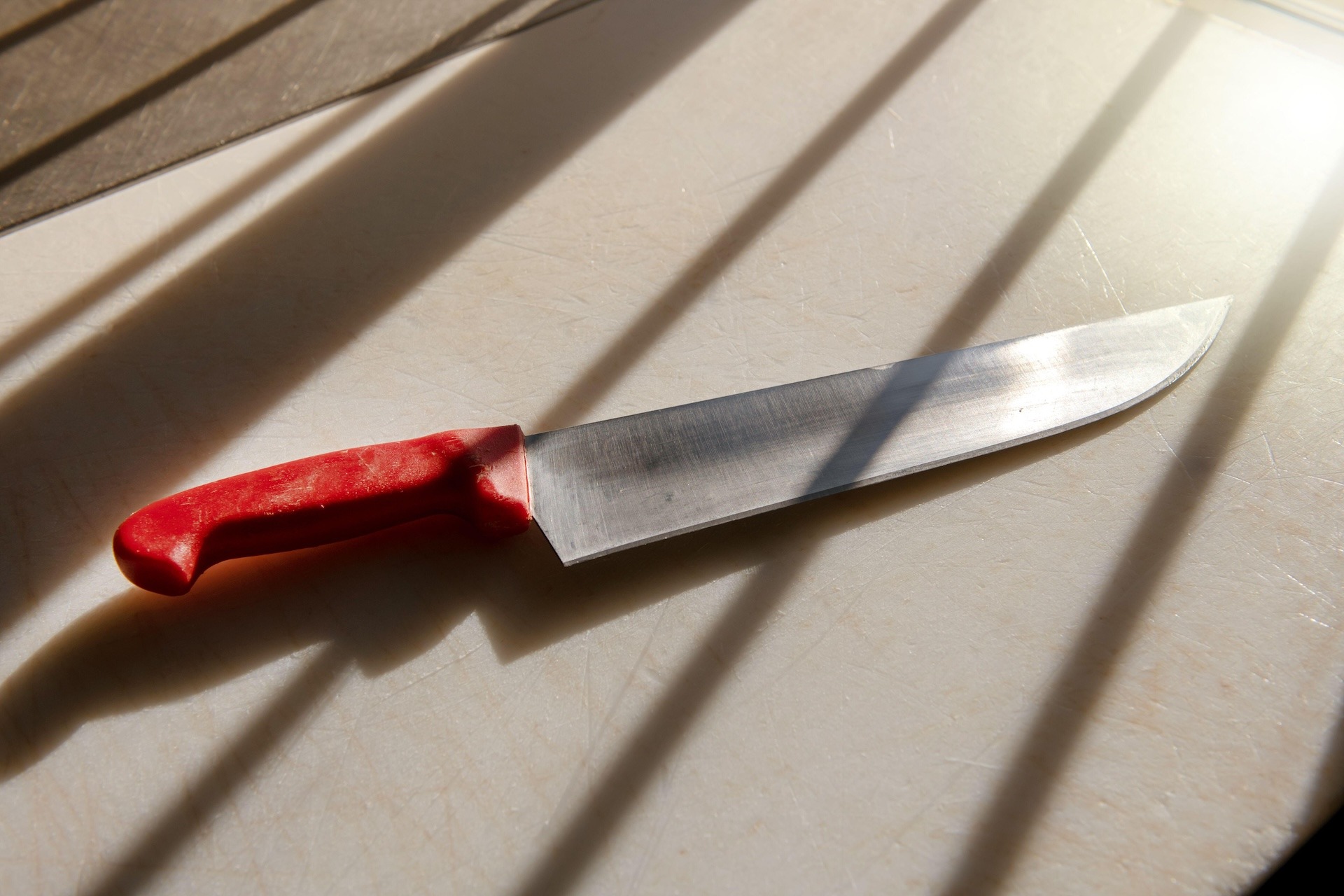
Yet, even in a naturally peaceful society, the human impulse for violence can never be completely eradicated. When individuals do cross the line into violence, South Korea’s hyper-strict gun laws trigger a classic criminological phenomenon: weapon substitution. Because civilian firearm ownership is extremely limited – with hunting rifles required to remain locked inside local police stations – many attackers have turned to a more readily accessible tool: the kitchen knife. This is even reflected in popular culture. In the climax of the 2019 Oscar-winning movie Parasite, a knife-wielding man runs rampage at a garden party, killing several guests.
The phenomenon has shaken the country. South Korea has recently grappled with a deeply unsettling surge in what locals call Mudjima (“Don’t Ask Why”) attacks – random, public mass stabbings targeting complete strangers in crowded subway stations and shopping complexes. In several high-profile incidents, perpetrators armed with easily obtained blades have successfully inflicted mass casualties before authorities could intervene. Because a knife requires no permit, background check or black-market connection to acquire, the barrier to staging an attack is significantly lower than it would be with a firearm. A bladed weapon is completely silent, requires no reloading, never jams and is effortlessly concealed in a jacket pocket until the moment of impact. This stealth factor fundamentally alters the mechanics of the attack, as well as how to respond to it.
In response to the Mudjima attacks, the government deployed thousands of extra personnel to transport hubs, authorised a rare nationwide stop-and-search sweep that netted hundreds of concealed blades and officially ordered police to “actively use physical force, including firearms,” to halt knife-wielding suspects.
Of course, the South Korean phenomenon of weapon substitution is not evidence that strict firearm control triggers violence by other means. However, it does prove that disarmament in and of itself does not rewrite human psychology; it merely alters the tactical playbook.