

Sometimes, it helps to look to the past to understand the present. Take the sustained opposition in the firearm sector to proposed government legislation to further restrict civilian gun-ownership in South Africa through the Firearms Control Amendment Act.
On the surface, this is a present-day issue. But what if its roots run much deeper? What if it is a symptom of a historical mindset of rugged individualism baked into the DNA of the first European settlers?
Consider the historical canvas upon which the early settler psyche was forged: the vast, 19th-century interior stretching between the wind-swept shores of the Western Cape and the wide-open plains of the northern interior.
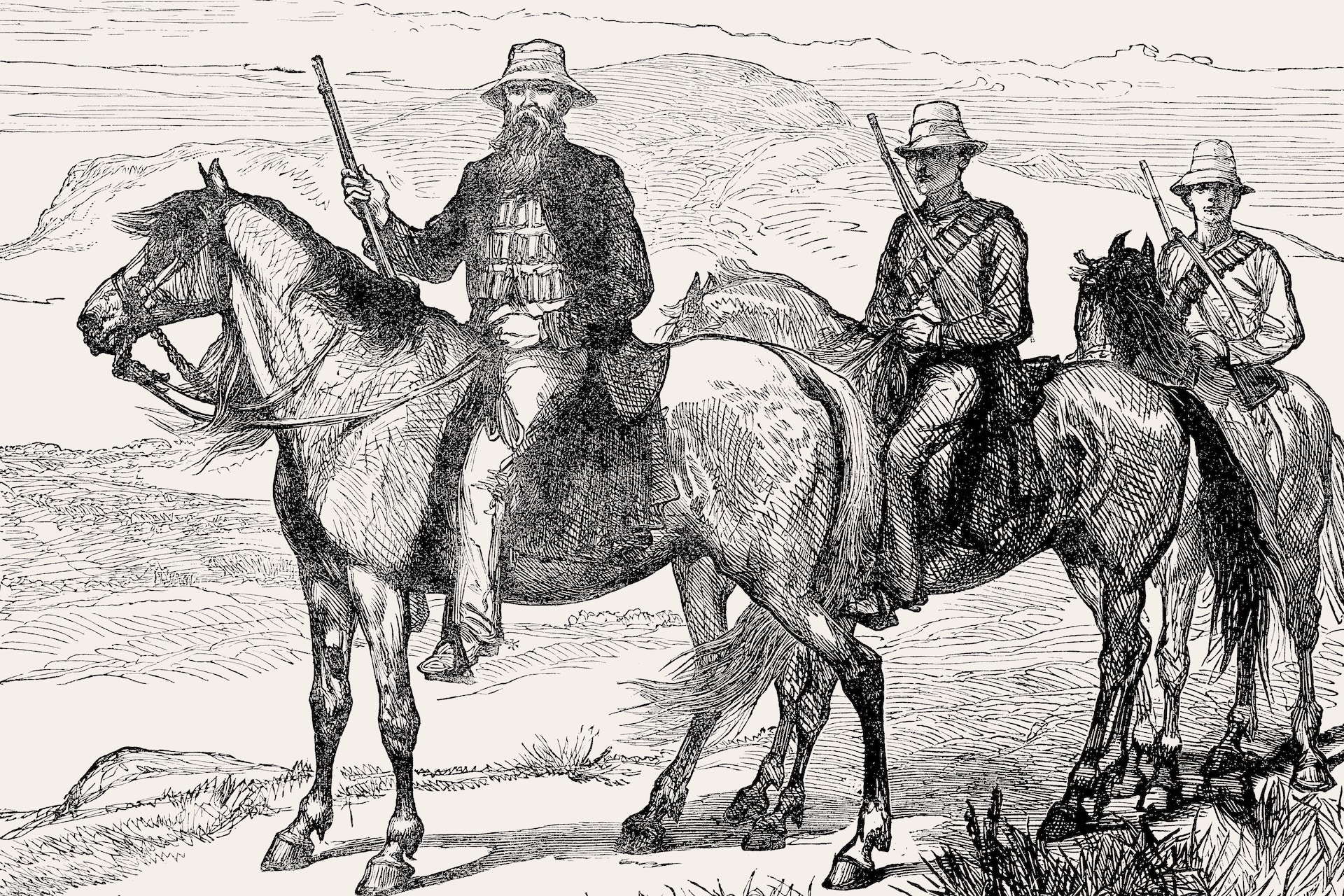
Much like the American Wild West, it was a sprawling, untamed frontier fraught with danger. As the Voortrekkers migrated into the interior during the Great Trek, away from centralised colonial governance, they quickly absorbed a brutal, practical reality. The authorities were too far away to save you; you were your own first responder. On this rugged frontier, the rifle became the ultimate symbol of personal sovereignty and basic survival.
This individualistic, frontier ethos was dramatically solidified during the Anglo-Boer War from 1899 to 1902. Just as early American revolutionaries used their private hunting muskets to fight the British Crown a century earlier, the Boer commandos used their personal Mauser rifles to launch a devastating guerrilla campaign against that exact same global superpower.
The conflict permanently canonised the myth of the rugged civilian marksman – the ordinary citizen whose superior firearm proficiency could hold an empire at bay. Crucially, the British response, which relied heavily on scorched-earth tactics and the forced disarmament of the civilian population, left a generational trauma in the Afrikaner psyche. When it came to firearms, this cemented a foundational distrust of state overreach and birthed the enduring belief that a government seeking to disarm its populace is a government paving the way for subjugation.
However, running parallel to this fierce individualist strand was the power of the state, embodied in the inherited parliamentary and legal traditions of European colonialism. Both Dutch and British administrators brought a collectivist philosophy to African shores, dictating that the state must maintain an absolute monopoly on legitimate violence. In this European worldview, public safety is a communal project managed entirely by the government. The individual is expected to surrender their defensive sovereignty in exchange for institutional protection and the predictable rule of law.
Modern South Africa’s deep legislative paralysis on firearms may well be a direct result of these two competing historical DNA strands. The Firearms Control Act (FCA) of 2000 is essentially an idealistic, European collectivist document thrust upon a country with a high rate of violent crime and part of its population still possessing a frontier survival mindset. The government wishes to impose a high-trust, heavily restricted European model where civilian weapon ownership is treated as a rare, state-vetted privilege.
Yet, when ordinary citizens look at a landscape plagued by violent crime and inadequate state policing, their instinct for self-preservation takes precedence and they revert to their frontier programming. Can the good intentions of 21st-century gun-control restrictions overcome the inherent distrust of those citizens who still possess a 19th-century frontier soul?