

Czechia is one of the world’s most peaceful countries despite a heavily armed populace
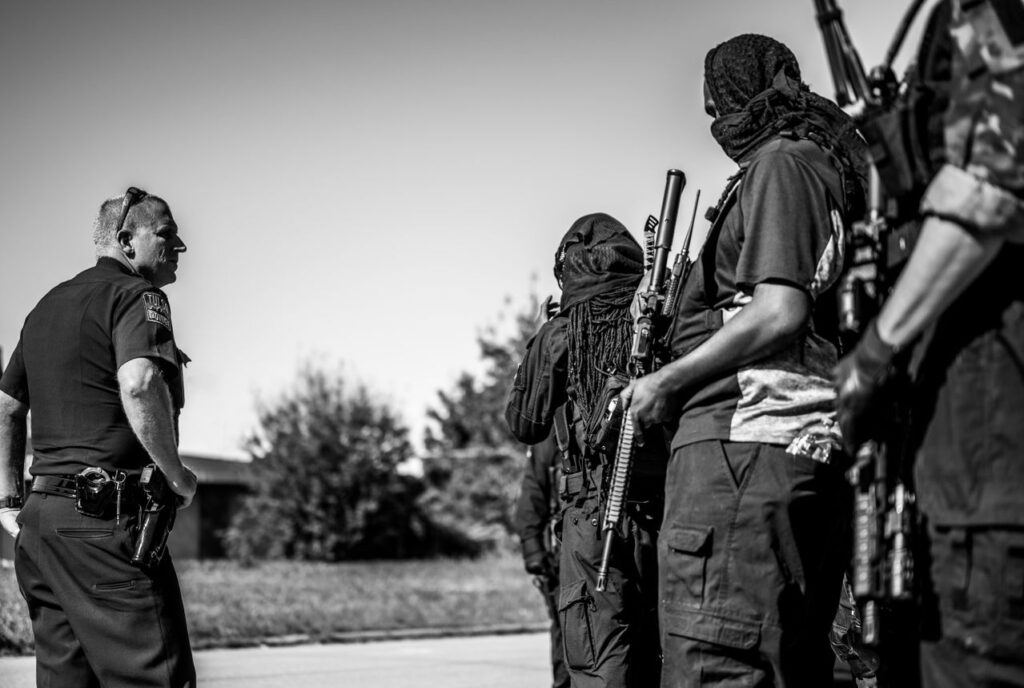
If you order a coffee at a pavement café in Prague or board a crowded tram in the historic city centre, there is a very high probability that the ordinary citizen sitting next to you has a loaded, semi-automatic handgun concealed under their jacket.
To most outsiders, this is a uniquely American phenomenon. The common assumption is that all of Europe operates under a uniform policy of strict civilian disarmament. The Czech Republic (Czechia) shatters this myth by being Europe’s quiet, heavily armed stronghold.
The Czech model does not just tolerate civilian self-defence; it gives it explicit legal recognition. Unlike many European jurisdictions, Czechia allows qualified citizens to carry a defensive firearm in public under a regulated licensing system.
In July 2021, the nation took the extraordinary step of amending its constitutional Charter of Fundamental Rights and Freedoms. The amendment explicitly guarantees the right to defend one’s own life, or the life of another, with a weapon. It was a pre-emptive move to prevent a possible future ban on firearms by the European Union. It frames personal safety as an individual right enshrined in law rather than as a concession granted by the state.
Out of the country’s roughly 324,000 licensed gun-owners, around 80% hold a specifically extended licence for concealed carry and personal protection. This means more than a quarter-of-a-million private individuals are legally permitted to walk the streets with a loaded Glock hidden in their waistband.
Crucially, however, Czechia is not a free-for-all Wild West. It operates in a sane middle ground between unchecked American liberty and absolute European prohibition. You have the right to carry, but you must strictly earn it; you cannot just buy your way into ownership.
You must flawlessly demonstrate how to safely clear a complex weapon malfunction under scrutiny, hit designated targets under time pressure, and pass a comprehensive, written law test. This is backed by medical vetting and a digital national weapons register. Under recent legal reforms, family doctors are legally mandated to report directly to the police if a gun-licenced patient exhibits warning signs of mental illness or instability.
The system appears to work well. Despite having hundreds of thousands of armed civilians moving through public life, Czechia consistently ranks near the top-ten safest countries on the Global Peace Index, with street gun-crime comparatively rare.
The Czech compromise suggests that public carry and massive firearm density do not inherently trigger societal chaos. With the right legal, training and vetting structure in place, defensive firearm-ownership can coexist with a safe, orderly society.