
Sun, sand, sea, reggae music… and gun violence on an unimaginable scale. If Switzerland is the global standard for high gun-density and near-zero violence, Jamaica stands as its tragic, mathematical inverse.
The Caribbean island presents a striking contradiction: a country where civilian firearm ownership is exceptionally low, yet gun-related slaughter sits near the top of the global charts. Even violent South Africa’s rate of gun deaths is about half that of Jamaica.
According to the Small Arms Survey, Jamaica features an incredibly low civilian gun-density, possessing an estimated 8.8 firearms per 100 people – both legal and illegal combined. That is roughly one-third of the density found in peaceful Switzerland. Obtaining a legal firearm licence in Jamaica is an incredibly rare, heavily restricted, multi-year bureaucratic hurdle managed under the draconian Firearms (Prohibition, Restriction and Regulation) Act, which carries a mandatory minimum prison sentence of 15 years for possessing an unlicensed weapon.
Yet, despite effectively disarming the law-abiding public, Jamaica consistently registers the highest or second-highest per-capita murder rate on Earth. Data from the United Nations Office on Drugs and Crime (UNODC) reveals that the national homicide rate routinely fluctuates between 45 and 53 murders per 100,000 people annually – nearly double that of South Africa and roughly 100 times higher than Switzerland. Most tellingly, over 85% of these homicides are committed using firearms.
Jamaica does not possess a single domestic arms factory, nor does it manufacture ammunition. The thousands of firearms fuelling its streets are all smuggled. Because it is an island nation strategically situated along major Caribbean shipping routes, international criminal syndicates aggressively exploit its porous maritime borders.
According to the UNODC Caribbean Firearms Study, the maritime “Guns for Ganja” pipeline between Jamaica and neighbouring nations like Haiti remains a primary driver of illicit arms-trafficking in the region. Jamaican marijuana is smuggled via go-fast boats to nearby nations like Haiti or Honduras and traded directly for high-calibre, black-market handguns and automatic rifles. Simultaneously, countless illegal firearms enter the country hidden inside commercial shipping containers passing through the bustling port of Kingston, packed into the false bottoms of water heaters, or concealed in everyday grocery barrels.
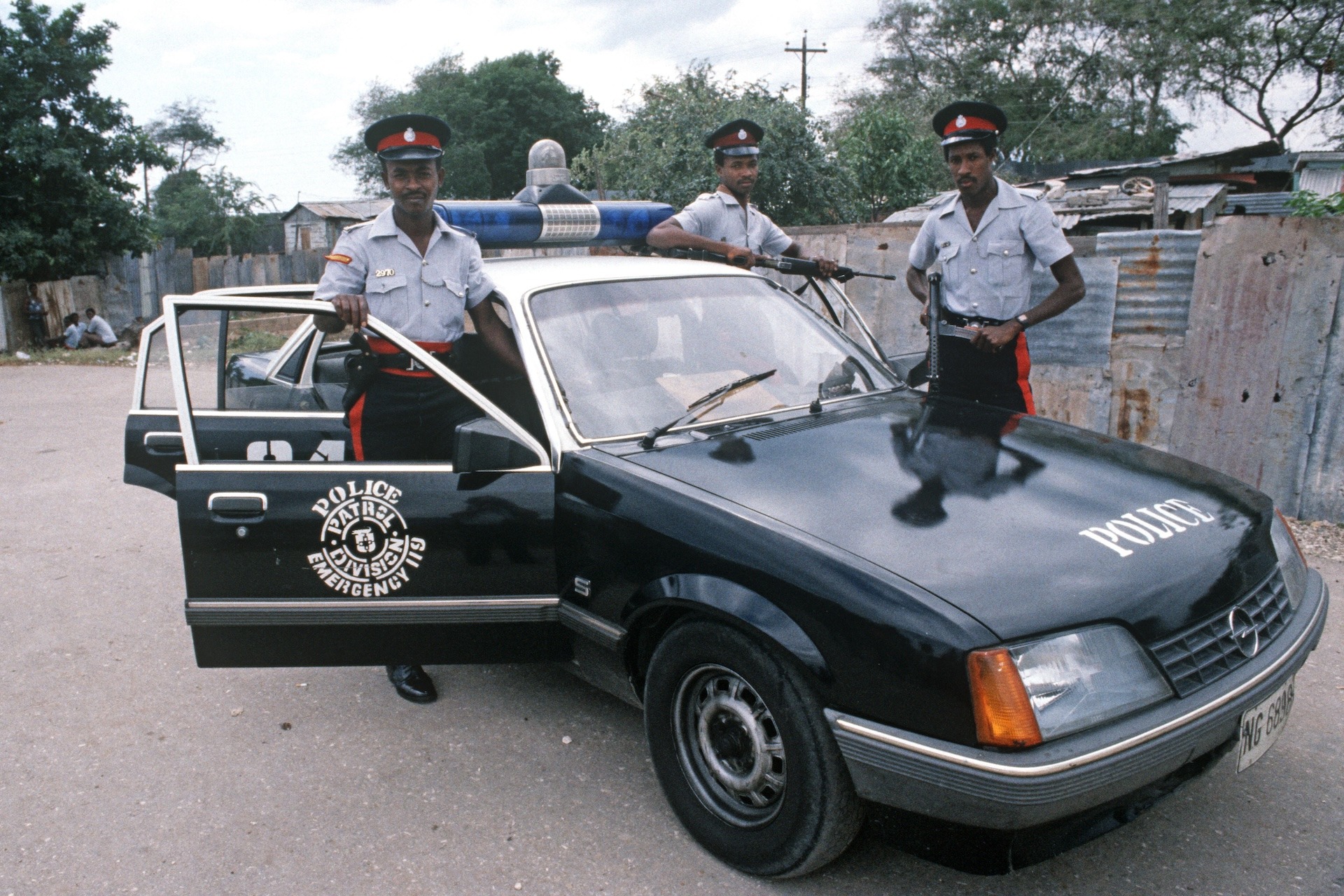
This black-market firepower feeds straight into violent street gangs – locally known as “posses” – that exert territorial control over volatile urban pockets in Kingston and Montego Bay. Much like the South African reality, these gangs use smuggled firearms to enforce extortion rackets and wage turf wars over local drug-distribution networks. Because the state’s underfunded police and coast guard are deeply overstretched, these criminal syndicates operate with a high degree of tactical impunity.
The Jamaican contradiction sends an unsettling message to policymakers. Aggressive gun-control legislation means little if a state cannot secure its borders, control its maritime entry points and police its streets. Instead, it merely disarms law-abiding citizens while leaving criminals free to arm themselves with illegal weapons.